DOT Drug Testing Requirements for Contractors in Southeast Texas
DOT Drug Testing Requirements for Contractors in Southeast Texas: Comprehensive Compliance and Scheduling Guide
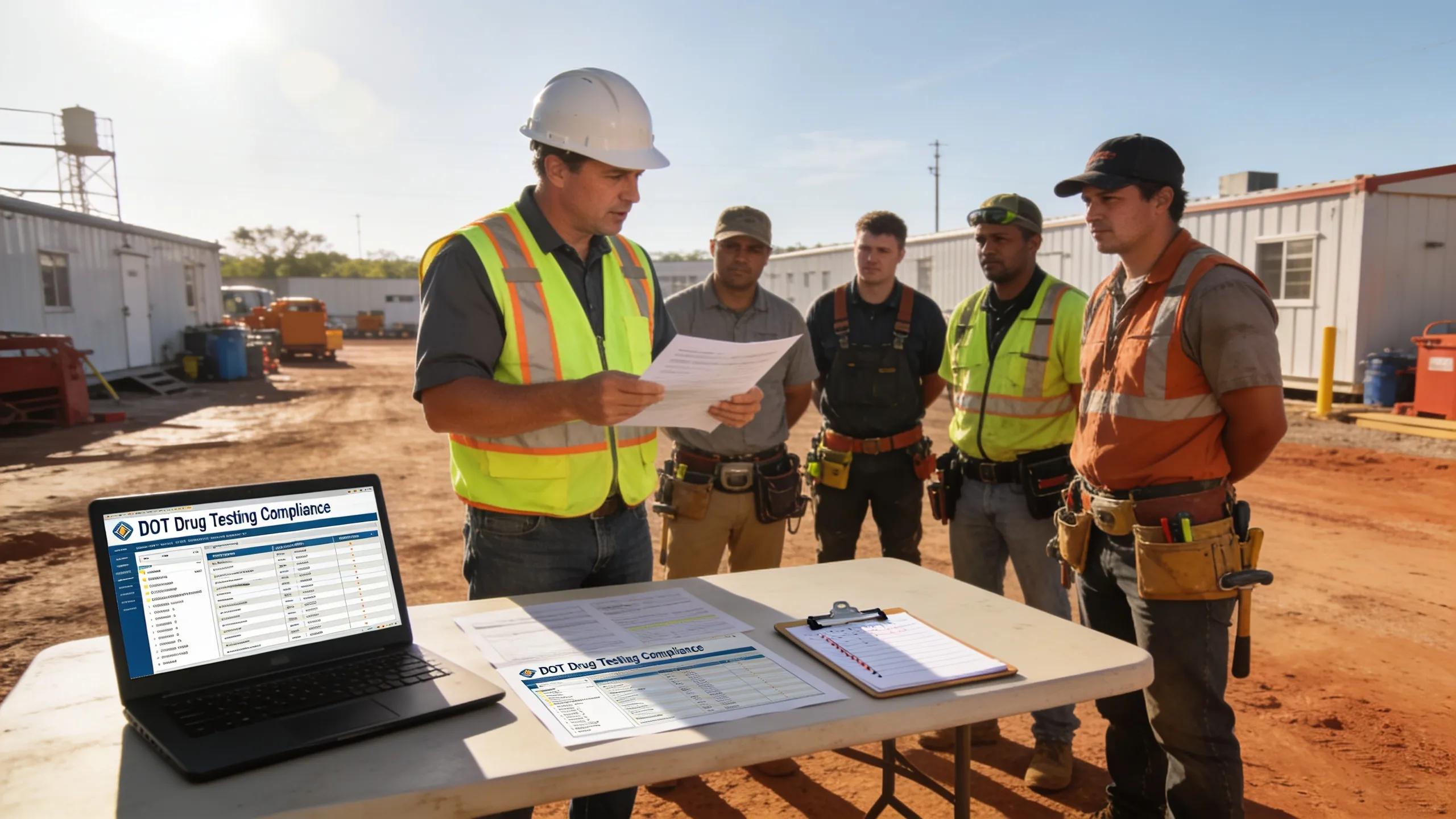
Contractor reviewing DOT drug testing compliance with team at a construction site in Southeast Texas
By Joe Clark, Beaumont Occupational Services
In Southeast Texas, adhering to the Department of Transportation (DOT) drug testing requirements is crucial for contractors. These regulations are enforced to ensure safe operational practices within the workforce that drives, operates, or manages commercial vehicles. This guide provides valuable insights into the essential aspects of DOT drug testing, including how frequently testing should occur, the types of tests mandated, and strategies for maintaining compliance. Understanding these factors is important for protecting the integrity of your business and ensuring the safety of your employees on the job. We will cover key regulations, testing procedures, compliance strategies, and recent updates affecting drug testing protocols, thus preparing contractors for rigorous adherence to DOT guidelines.
What are the key DOT drug testing regulations for contractors in Southeast Texas?
Contractors in Southeast Texas must comply with specific DOT regulations pertaining to drug testing. These regulations aim to minimize the risk of accidents resulting from drug or alcohol use by ensuring that only sober individuals operate commercial vehicles. The emphasis on compliance can't be overstated, as it not only enhances workplace safety but also protects the contractors from legal liabilities associated with accidents caused by impaired driving.
Beaumont Occupational Services specializes in facilitating occupational health compliance and offers testing services tailored to meet DOT drug testing requirements for contractors in the region. Ensuring compliance can greatly reduce legal risks and foster a safer work environment.
How often must contractors in Southeast Texas undergo DOT drug testing?
Contractors in Southeast Texas are required to perform several specific types of drug tests at designated frequencies as part of their compliance efforts. This includes pre-employment testing for new hires, random testing throughout employment, and post-accident testing for specific incidents. The regulations stipulate that random testing must comprise at least 50% of the specified testing pool on an annual basis, ensuring that a diverse set of employees is tested without predictability.
Contractors must also ensure timely administration of post-accident testing, typically within a designated timeframe after an incident occurs, and recognize specific situations that trigger such testing requirements, including vehicle accidents resulting in injuries.
What types of DOT drug and alcohol testing procedures are required?
Understanding the various testing procedures is essential for contractors aiming to comply with DOT regulations. The primary types of testing mandated include:
- Pre-Employment Testing: Conducted before hiring potential employees to assess their drug-free status.
- Random Drug Testing: Unannounced testing performed on employees selected randomly to deter drug use.
- Post-Accident Testing: For employees involved in accidents resulting in injuries or significant vehicle damage.
Moreover, contractors must also consider the inclusion of reasonable suspicion testing, which is triggered when an employee exhibits behaviors indicative of drug use, and return-to-duty testing, which is required after an employee has failed a previous test or violated drug policies.
What are the roles of random and scheduled testing in contractor compliance?
Both random and scheduled testing play a significant role in maintaining compliance with DOT regulations. Random testing creates a deterrent effect, as employees are aware that they may be tested at any time. This unpredictability encourages a drug-free workplace and supports overall safety.
On the other hand, scheduled testing, which may follow a pre-established timeline or be initiated after an employee returns to duty following a violation, serves as an additional layer of compliance. Contractors need a balanced approach between these testing types to ensure ongoing adherence to DOT regulations and maintain a secure working environment.
How can contractors in Southeast Texas effectively manage DOT drug testing compliance?
Contractors can take several proactive measures to effectively manage their DOT drug testing compliance. Firstly, establishing a comprehensive drug testing policy that reflects all necessary guidelines and is rigorously communicated to the workforce is essential. Training supervisors to recognize and address potential substance abuse issues can also create a culture of accountability within the organization.
Moreover, utilizing specialized services from providers like Beaumont Occupational Services can simplify compliance efforts. They offer assistance in scheduling tests, managing documentation efficiently, and keeping up with evolving regulations, thereby reducing the administrative burden on contractors.
What recent legal and regulatory updates impact DOT drug testing in Southeast Texas?
Recent changes in legal and regulatory frameworks have impacted how contractors approach compliance with drug testing requirements. This includes changes in the substances that are measured, adjustments to testing procedures, and updates on consent requirements. Staying informed about these updates is vital for contractors to adjust their policies and practices accordingly, ensuring that they remain compliant with federal and state laws.
Partnership with compliance specialists can help contractors navigate these evolving regulations while effectively managing their drug testing programs.
What penalties do contractors face for non-compliance with DOT testing laws in Texas?
Non-compliance with DOT testing laws could lead to severe penalties for contractors, including hefty fines, suspension of operating licenses, and increased liability in the event of accidents involving non-compliant employees. Furthermore, a lack of compliance can tarnish a contractor's reputation and undermine their credibility in the industry.
Thus, it is crucial for contractors to prioritize adherence to drug testing regulations to avoid these consequences and promote a safe work culture.
| Testing Type | Requirement | Frequency |
|---|---|---|
| Pre-Employment Testing | Mandatory for new hires | Before hiring |
| Random Drug Testing | At least 50% of the testing pool | Annually |
| Post-Accident Testing | Required after accidents involving injuries | Within defined period |
| Reasonable Suspicion Testing | When observable evidence is present | As needed |
| Return-to-Duty Testing | Required after previous violation | After completion of rehabilitation |
This table outlines the key drug testing requirements contractors must adhere to in order to remain compliant with DOT regulations. By implementing these testing protocols clearly and consistently, contractors can ensure the safety of their workforce and the integrity of their operations.
For contractors in Southeast Texas, meeting DOT drug testing requirements is not just a legal obligation; it is a commitment to safety and professionalism. Beaumont Occupational Services is available to assist contractors in navigating these complex requirements and ensuring compliance through tailored testing services. Reach out for expert guidance and to schedule your consultations today.
