Pre-Employment Drug Testing Services and Procedures
Pre-Employment Drug Testing Services and Procedures: Comprehensive Guide for Employers and HR Professionals
Pre-employment drug testing has become a crucial component of hiring processes across various industries. Employers often seek to ensure that their prospective employees are not using illicit substances that could affect their job performance and safety. This comprehensive guide outlines the various types of drug testing methods available, the step-by-step procedures involved, and the legalities surrounding compliance in drug testing. Employers will learn how to implement drug testing effectively while navigating the complexities of privacy and employee rights. Furthermore, this article will explore recent trends and regulatory updates affecting pre-employment drug testing practices, making it an essential read for HR professionals and employers aiming to uphold workplace standards.
What Are the Common Types of Drug Tests Used in Employment Screening?
Employers typically utilize several types of drug tests during the employment screening process, each with unique advantages and detection capabilities. The most common types of drug testing methods include urine, hair-follicle, saliva, and blood testing. The step-by-step procedures involved, and the legal aspects of these methods are also discussed. Each of these methods offers different detection windows and effectiveness levels.
| Test Type | Collection Method | Detection Window |
|---|---|---|
| Urine Drug Testing | Urine sample | 1-30 days |
| Hair Follicle Testing | Hair sample | Up to 90 days |
| Saliva Testing | Oral fluid | 1-3 days |
| Blood Testing | Blood sample | Hours to days |
Understanding these types not only helps employers choose the most suitable testing method but also informs employees about what to expect during the screening process.
What Are the Advantages of Hair, Saliva, and Blood Testing Methods?
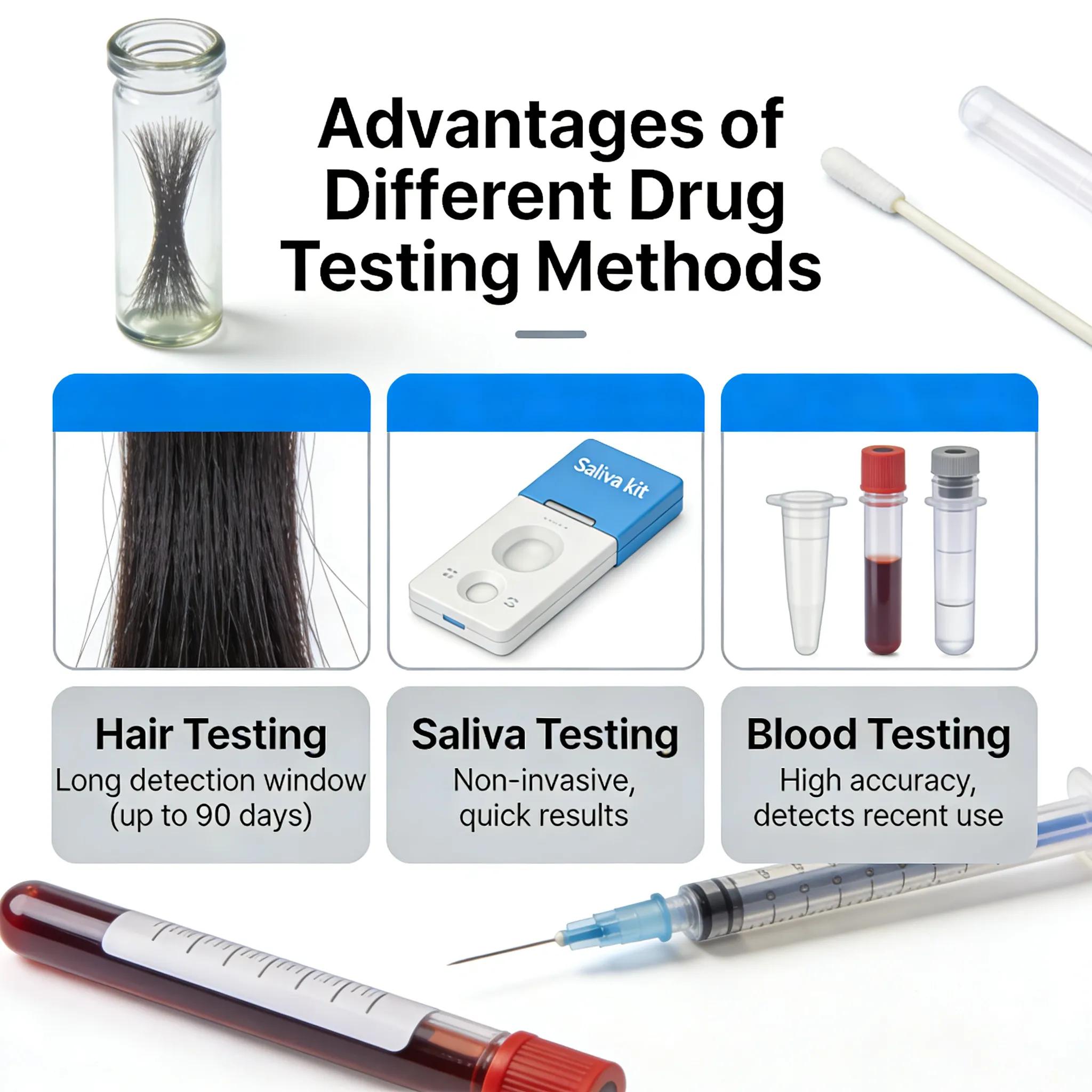
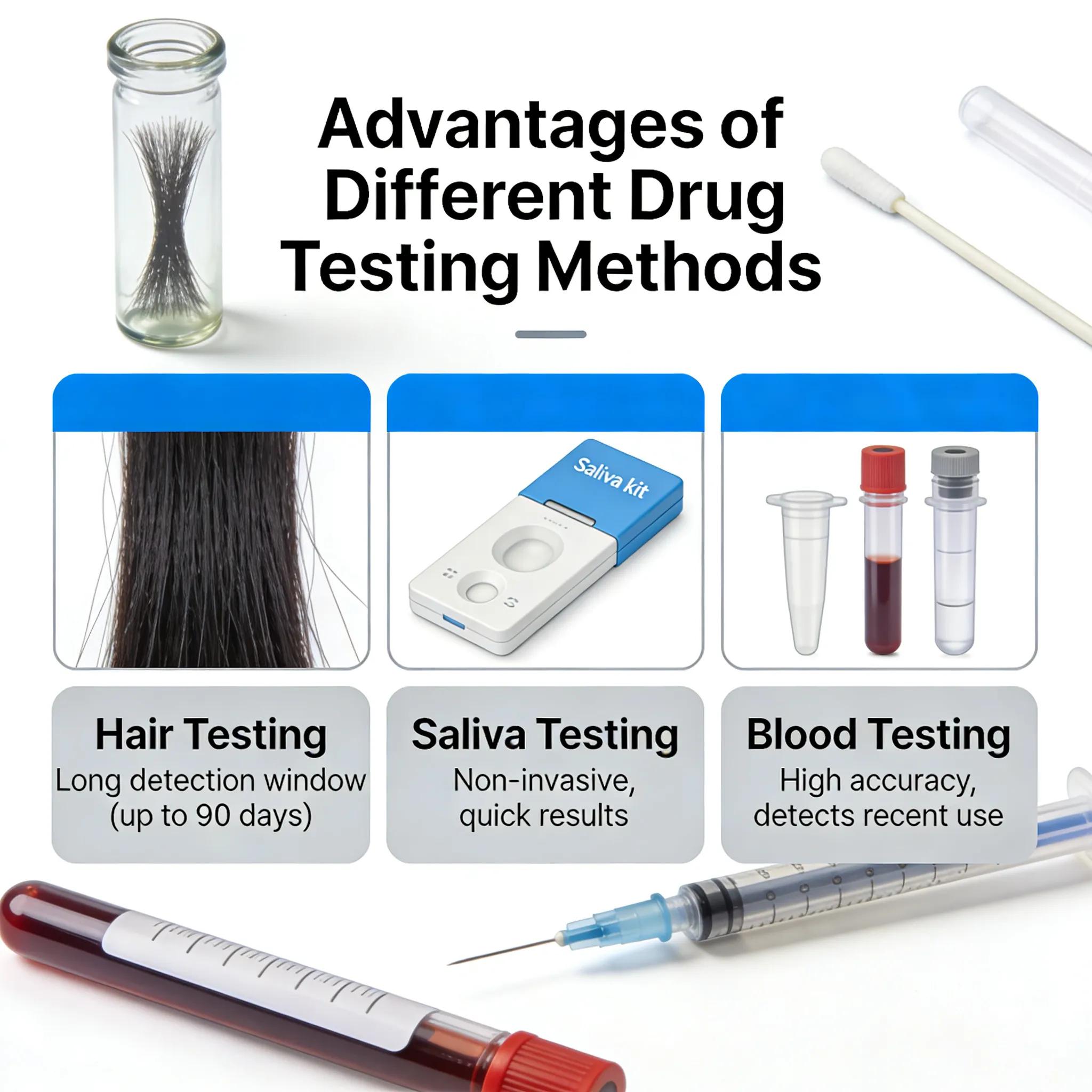
Each drug testing method offers distinct benefits and limitations. For instance, hair-follicle testing is appreciated for its longer detection window, which can reveal substance use over several months. Saliva testing provides a quick and non-invasive method for detecting substances, although its detection window is shorter. Blood testing, while more invasive, yields accurate results for recent substance abuse, making it valuable in high-risk positions where immediate drug use would pose significant dangers.
Hair Testing Advantages in Pre-Employment Drug Screening
Given the limitations of self-reports on drug use, testing for drugs of abuse is important for most clinical and forensic toxicological situations, both for assessing the reality of the intoxication and for evaluating the level of drug impairment. It is generally accepted that chemical testing of biological fluids is the most objective means of diagnosis of drug use. The presence of a drug analyte in a biological specimen can be used to document exposure. The standard in drug testing is the immunoassay screen, followed by gas chromatography–mass spectrometry confirmation on a urine sample. In recent years, remarkable advances in sensitive analytical techniques have enabled the analysis of drugs in unconventional biological specimens such as hair. The advantages of this sample over traditional media, such as urine and blood, are obvious: collection is noninvasive and relatively easy to perform, and, in forensic situations, it may be conducted under the close supervision of law enforcement officers to prevent adulteration or substitution. The window of drug detection is dramatically extended to weeks, months, or even years when testing hair. It appears that the value of analyzing alternative specimens for identifying drug users is steadily gaining recognition. This can be seen from its growing use in pre-employment screening in forensic science, in clinical applications, and for doping control. Hair analysis may be a useful adjunct to conventional urine drug testing. Methods for evading urinalysis do not affect hair analysis. The aim of this chapter is to document toxicological applications of hair analysis in drug detection.
Drug testing in hair, P Kintz, 2008
This ability of hair analysis to detect drug use over an extended period makes it a valuable tool for employers.
What Is the Step-by-Step Pre-Employment Drug Screening Process?
The pre-employment drug screening process is a structured procedure that begins with selecting the testing method. Employers should establish a clear protocol for arranging screenings to ensure consistency and regulatory compliance. Typically, this includes notifying candidates, obtaining consent, and selecting certified laboratories for analysis.
Certified collectors play a vital role in maintaining the integrity of the sample throughout the testing process. They are responsible for following proper protocols and ensuring the samples are collected securely to prevent tampering. Testing laboratories then analyze the samples and report the results back to employers.
What Are the Roles of Certified Collectors and Testing Laboratories?
Certified collectors are professionals trained to collect drug samples in accordance with industry standards and legal requirements. They ensure that each step of the sampling process adheres to regulations, including maintaining a chain of custody to prevent contamination or tampering. Testing laboratories, on the other hand, perform analytical testing of samples, report findings to employers, and ensure confidentiality and compliance with local regulations. Their role is pivotal in providing accurate and reliable results necessary for making informed hiring decisions.
How Do Employers Maintain Compliance with Drug Testing Regulations?
Employers must navigate a myriad of regulations governing drug testing to ensure compliance and protect both the organization and employees. This includes understanding the federal, state, and local laws related to drug testing, which can vary significantly. Employers are encouraged to maintain comprehensive policies that include regular updates on regulatory changes.
Additionally, implementing best practices in drug testing is imperative. This might include training staff who manage drug tests, ensuring they are well-versed in legal requirements, and maintaining transparent communication with employees about their rights during testing.
How Should Employers Address Privacy and Employee Rights in Testing?
The importance of privacy and employee rights during drug testing cannot be overstated. Organizations must be aware of the legal guidelines that dictate how information from drug tests can be handled. Employers should ensure that testing policies align with regulations that protect employees' rights, such as providing advance notice of testing and guaranteeing the confidentiality of results. It is often advisable for companies to consult with legal counsel to develop a compliant framework that respects both workplace safety and employee rights.
Workplace Drug Testing: Balancing Privacy and Employer Rights
As drug testing has become increasingly used to maximize corporate profits by minimizing the economic impact of employee substance abuse, numerous arguments have been advanced that draw the ethical justification for such testing into question, including the position that testing amounts to a violation of employee privacy by attempting to regulate an employee's behavior in her own home, outside the employer's legitimate sphere of control. This article first proposes that an employee's right to privacy is violated when the employer collects or uses personal information in a way that is irrelevant to the terms of employment. This article then argues that drug testing is relevant and, therefore, ethically justified under the terms of the employment agreement and does not amount to a violation of an employee's right to privacy. Arguments to the contrary, including the aforementioned appeal to the employer's limited sphere of control, do not account for reasonable constraints on employee privacy which are intrinsic to the demands of the workplace and implicit in the terms of the employment contract. Drug Testing and the Right to Privacy: Arguing the Ethics of Workplace Drug Testing, 1998
This highlights the ongoing debate and judicial considerations employers must navigate regarding workplace drug testing and the ethical arguments surrounding it.
How Are Drug Test Results Interpreted and Reported to Employers?
The interpretation of drug test results involves a careful examination of the findings to determine whether a candidate tested negative or positive for specific substances. Employers should rely on qualified personnel to interpret results, as improper interpretation can lead to wrongful decisions in the hiring process.
It's also crucial for employers to communicate test outcomes with sensitivity and confidentiality. Handling results responsibly not only adheres to ethical standards but also fosters a trustworthy workplace culture.
How Are Test Error Rates and Result Accuracy Managed?
Test error rates can significantly impact the reliability of drug testing processes. To mitigate such issues, testing laboratories often implement rigorous quality control measures, such as running control samples alongside actual tests. Continuous training for collectors and laboratory personnel also plays a key role in minimizing errors and ensuring meticulous adherence to testing protocols.
What Recent Trends and Regulatory Updates Affect Pre-Employment Drug Testing?
Current trends in the realm of drug testing highlight increasing acceptance of cannabis use due to changes in legislation across various states. Employers are reassessing their drug policies to remain competitive while ensuring workplace safety. Alongside this, technology developments are paving the way for non-invasive testing methods and quicker turnaround times for results.
What Regional and Industry-Specific Variations Should Employers Know?
Each region may have specific laws regarding drug testing that employers must consider. For instance, industries such as transportation and healthcare may have stricter regulations compared to others. Employers should conduct thorough research into local laws and industry requirements to ensure compliance while effectively meeting their drug screening needs.
